Lightweight Power Banks: Top Ultra-Light On-the-Go Power Options

Your phone dying isn’t the problem. Carrying the solution usually is.
For years, power banks have been treated as travel essentials, yet many of them feel like unnecessary baggage once they’re weighing down your bag or stretching your pockets. As more of daily life happens on the move, the expectation has shifted. It’s no longer about carrying the biggest battery possible. It’s about carrying something that makes sense.
That’s exactly where lightweight power banks prove essential. The best ones are thin, light, and easy to forget you’re carrying at all, while still delivering reliable charging when you need it most. But cutting weight often comes with trade-offs, and not every ultra-light option gets the balance right.
This guide looks at today’s top lightweight power banks and breaks down which models truly earn the title of the best lightweight battery pack for your daily routine - those that stay slim without sacrificing performance, safety, or everyday usability.
Let’s get started!
Lightweight Power Banks: What Really Matters (and What Usually Gets Compromised)
The Essentials
“Lightweight” is one of the most overused terms in the power bank market. In practice, it’s not just about grams on a spec sheet. It’s about how a power bank fits into real life.
For commuters, travelers, students, and minimalists, a truly lightweight power bank usually needs to deliver four things:
- Low physical weight, ideally under 150 grams
- A slim profile that fits easily into a pocket, pouch, or small sling
- Enough capacity for a full day, not a multi-day camping trip
- Charging performance you can rely on, both in speed and safety
This is why the 5,000 mAh category has often become the sweet spot for everyday users. It’s typically enough to recharge a smartphone once or more, without turning the power bank into something you actively notice carrying.
The Compromises
That said, opting for a lightweight portable charger almost always involves trade-offs. The most common ones include:
- Reduced capacity, which limits usage beyond a single day
- Slower charging speeds, especially on wireless-only designs
- Shorter battery lifespan, particularly with lower-quality cells
- Heat management challenges, which are more pronounced in thinner bodies
This is where many lightweight power banks fall short. They look great on paper, but compromise on charging speed, safety, or longevity. Details like fast-charging support, temperature control, and battery cycle ratings matter far more here than flashy claims.
Wireless charging and magnetic attachment have also changed expectations. For people juggling bags, transit cards, and coffee cups, snapping a power bank onto the back of a phone can be genuinely useful. But wireless convenience only works if it’s paired with proper alignment, heat control, and realistic charging speeds.
Understanding these balances makes it much easier to spot which lightweight power banks are thoughtfully designed, and which ones are simply stripped down.
The 5 Best Lightweight Power Banks Worth Considering
Lightweight power banks all aim for portability, but they don’t all get there the same way. Some prioritize brand trust, others focus on minimalism or ruggedness, while a few try to balance slim design with modern convenience.
Below are five popular lightweight options that regularly come up for on-the-go users, each with its own strengths and trade-offs.
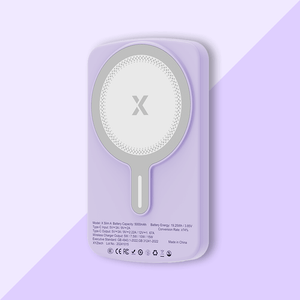
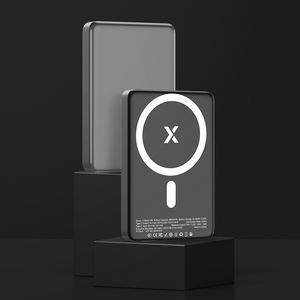
1. XYZtech X Slim B Wireless Power Bank
Capacity: 5000mAh
Weight: 115g
Output: PD 20W max wired | 15W max wireless

Image via XYZtech
The XYZtech X Slim B Wireless Power Bank is designed for people who carry a power bank daily, not just for emergencies. Weighing 115 g and measuring only 0.38 inches thick, it’s slim enough to slip into a pocket or attach magnetically to a phone without feeling bulky. Despite its size, it supports up to 15W wireless charging and 20W PD fast charging via USB-C, delivering up to 1.5 full charges for an iPhone-sized device.
It also emphasizes safety and longevity, with NTC temperature control, airline-friendly certification, and a 1,000 charge-cycle lifespan, which is reassuring for long-term use. It stands as a strong example of how modern lightweight power banks can deliver serious performance without the bulk.
|
Pros |
Cons |
|
✔ Extremely thin and lightweight for everyday carry ✔ Strong MagSafe-compatible N52 magnetic attachment ✔ Fast wired (20W) and wireless (15W) charging ✔ Temperature monitoring for safer charging ✔ Long-rated battery lifespan |
❌ 5,000 mAh capacity may feel limiting for multi-day use ❌ Wireless charging still produces more heat than wired charging |
2. Anker 321 MagGo Battery Pack (5K)
Capacity: 5000mAh
Weight: 127g
Output: 12W max wired | 7.5W max wireless

Image via Anker
The Anker 321 MagGo is a dependable, no-surprises option backed by a brand many users already trust. It delivers 5,000 mAh of capacity with MagSafe-style magnetic attachment and a clean, familiar design. Everything about it feels solid and well-made, which is often why people gravitate toward Anker products.
That said, its performance reflects a more conservative design approach. Wireless charging is capped at 7.5W, and wired charging is slower than what newer models offer. It’s also slightly heavier than some competitors, which may matter to users who prioritize minimal carry weight.
|
Pros |
Cons |
|
✔ Strong brand reputation and quality control ✔ Reliable magnetic attachment ✔ Consistent, stable charging performance |
❌ Slower charging speeds compared to newer designs ❌ Slightly heavier for its capacity ❌ Often priced higher based on brand name |
3. INIU SnapGo P81-E1
Capacity: 5000mAh
Weight: 116g
Output: PD 20W max wired | 5W max wireless

Image via INIU
The INIU SnapGo P81-E1 is a lightweight power bank designed for users who want to charge both an iPhone and an Apple Watch, without carrying multiple chargers. It features a 5,000 mAh battery, a built-in wireless charging pad for Apple Watch, and a wired USB-C output for phones.
This makes the SnapGo P81-E1 not only about phone convenience but also accessory consolidation. It’s best viewed as a travel-friendly companion for users who need extra juice for both their phone and their Apple Watch.
|
Pros |
Cons |
|
✔ Compact and lightweight design ✔ Built-in wireless charging for Apple Watch ✔ Practical for Apple-focused users |
❌ Limited capacity for extended use ❌ Fewer advanced thermal or power features |
4. Nitecore NB5000 Carbon Battery
Capacity: 5000mAh
Weight: 115g
Output: 18W max wired

Image via Nitecore
The Nitecore NB5000 is a lightweight portable power bank built for users who obsess over weight savings. Its carbon fiber shell keeps it extremely light while maintaining durability, making it popular among hikers, backpackers, and endurance athletes.
The focus here is efficiency and ruggedness rather than convenience. There’s no wireless charging or magnetic attachment, and the design feels more like outdoor gear than a daily accessory. It’s also priced higher, reflecting its niche positioning rather than everyday value.
|
Pros |
Cons |
|
✔ Extremely lightweight for its durability ✔ Rugged construction suited for outdoor use ✔ Efficient wired charging |
❌No wireless or magnetic charging features ❌Premium price for 5,000 mAh capacity ❌Less comfortable for everyday, urban use |
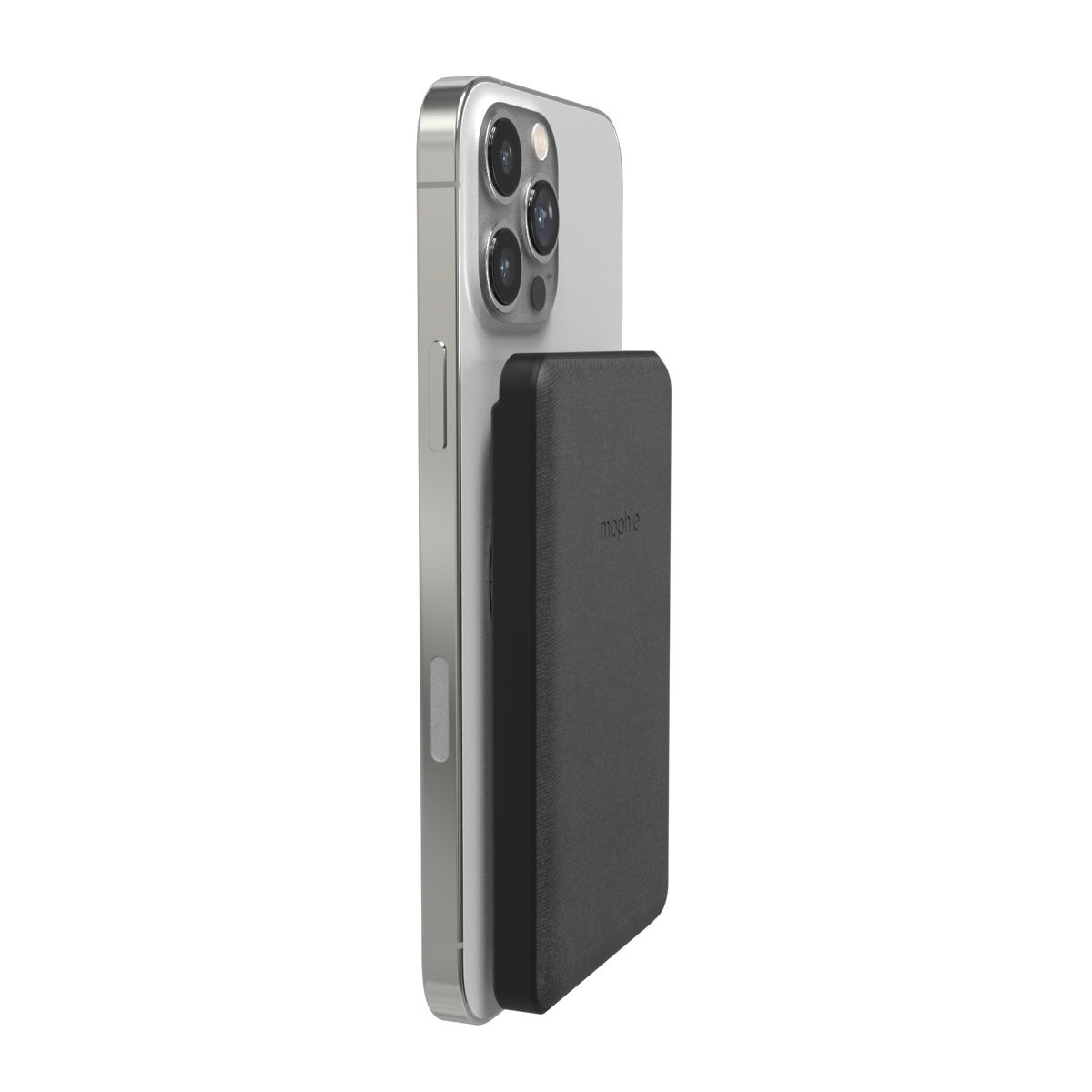
5. Mophie Snap+ Juice Pack Mini
Capacity: 5000mAh
Weight: 131g
Output: 12W max wired | 7.5W max wireless

Image via Zagg
The Mophie Snap+ Juice Pack Mini leans heavily into design and ecosystem compatibility. It offers magnetic attachment and wireless charging technology in a polished, minimalist form that pairs well with Apple devices.
However, its charging speeds are modest, and it’s heavier than most ultra-light competitors. While it looks good and feels premium, spec-focused users may find better performance elsewhere at a similar price. It’s a strong choice for seamless integration, but may not be the best lightweight battery pack for those prioritizing speed or maximum weight savings.
|
Pros |
Cons |
|
✔ Sleek, premium design ✔ Reliable magnetic alignment ✔ Well-known accessory brand |
❌ Slower charging speeds ❌ Heavier than similar-capacity options ❌ Higher cost relative to performance |
How to Choose the Best Lightweight Battery Pack for You
Choosing the right lightweight power bank isn’t about chasing the highest specs. It’s about matching the device to how you actually live, move, and charge your phone. Think of your perfect lightweight portable charger as an extension of your daily routine rather than just a backup battery.
For the Daily Commuters and Office Workers
- If you’re moving between home, transit, and work, convenience matters more than raw capacity. A slim power bank with wireless charging and magnetic attachment can be especially useful during short breaks or while standing on a train. Weight and thickness matter here because the power bank is likely living in your pocket or bag every day.
- Look for fast charging, good thermal management, and a form factor that doesn’t get in the way.
For the Travelers and Frequent Flyers
- Travelers should focus on airline-friendly certification, thermal safety, and reliability. A 5,000 mAh power bank is often enough to get through long flights, layovers, and city days without adding unnecessary bulk to carry-on luggage.
- Wireless charging can be helpful in airports and cafés, but fast wired charging is still important when time is limited.
For the Students and Campus Life
- Students often juggle long days, multiple devices, and limited outlet access. A lightweight power bank that charges quickly and doesn’t take up space in a backpack is ideal. Durability and battery lifespan also matter, since the power bank is likely to be used daily over several years.
- Affordability may be a factor, but reliability is just as important.
For the Minimalists and Everyday Carry Enthusiasts
- Minimalists want gear that earns its place. That usually means thin, lightweight, and versatile. A power bank that supports both wired and wireless charging can reduce the need to carry extra cables, while a slim profile keeps pockets uncluttered.
- Here, thoughtful design often matters more than capacity numbers.
For the Outdoor and Adventure Users
- If you spend time hiking, camping, or traveling off-grid, durability and efficiency matter most. Lightweight construction helps, but rugged materials and consistent wired charging are more important than wireless convenience.
- For this group, ultra-light doesn’t necessarily mean ultra-thin. It means dependable under stress.
Final Thoughts: Lightweight Without Regret
Lightweight power banks have evolved from compromise devices into genuinely useful everyday tools. The best lightweight battery pack options don’t just save weight—they save space, time, and frustration.
Choosing the right model means understanding your habits and knowing which trade-offs you’re willing to accept. When weight, charging speed, safety, and convenience are properly balanced, a power bank stops feeling like a backup plan and starts feeling like a natural extension of how you move through the day. Ultimately, the ideal lightweight power banks are those you carry without a second thought—and that’s precisely what defines the best lightweight battery pack for you.
Frequently Asked Questions
Q: Do lightweight power banks drain faster than larger ones?
Lightweight power banks don’t drain faster by default, but their smaller capacity means they have less total power available. Usage habits, charging efficiency, and device demand play a bigger role than size alone.
Q: Are lightweight power banks less durable than heavier models?
Not necessarily. Durability depends more on build quality, internal components, and battery management than weight. Some lightweight models are engineered for long-term daily use, while others cut corners to reduce cost.
Q: Is wireless charging less efficient on lightweight power banks?
Wireless charging is generally less efficient than wired charging, regardless of power bank size. Lightweight models may show a slightly bigger efficiency gap due to heat and space constraints, but the convenience often outweighs the loss.