

Best Gamer Power Bank 2026: Top Picks for Every Gaming Style

More power doesn’t always mean better gaming, it’s about playtime, performance, portability, and how you actually play.
Choosing a gamer power bank isn’t about chasing the biggest number on the label. It’s about matching battery capacity, charging speed, and portability to how you actually game. A casual mobile gamer doesn’t need the same setup as someone gaming on a handheld console during a long flight, or a laptop gamer pushing high wattage on the road.
This guide breaks down different gamer types, the power bank specs that actually matter for each, and our top picks, so you can choose the best power bank for gaming without overbuying, carrying unnecessary weight, or ending up with power you can’t even use.
In this blog:
- What Gamers Look for in a Gamer Power Bank
- Different Gamer Types and the Best Power Bank for Gaming
- Quick Comparison: Best Gamer Power Bank by Gamer Type
- Our Top Gamer Power Bank Picks: Pros and Cons
- Frequently Asked Questions
Let’s get started!
What Gamers Look for in a Gamer Power Bank
Across forums and real-world discussions, gamers consistently care about a few core things. The priorities change depending on play style, but the fundamentals stay the same.
|
What Gamers Want |
Why It Matters |
|
Enough capacity for their session |
Prevents mid-game shutdowns and forced breaks |
|
Reduces downtime between matches or play sessions |
|
|
Stable power output |
Avoids slow charging or battery drain while gaming |
|
Portability |
Heavy power banks get left at home |
|
Essential for travelers and handheld gamers |
|
|
Multiple ports (if needed) |
Charge phone, controller, or headset together |
One clear takeaway from gamer discussions: bigger isn’t always better. If the wattage is too low, higher mAh doesn’t help. The best gamer power bank is the one that matches how and where you play.
Different Gamer Types and the Best Power Bank for Gaming
Casual & Mobile Gamers (10,000mAh +)
Best use case: Phone gaming, short sessions, daily carry
Who this includes:
- Mobile gamers (COD Mobile, Mobile Legends, PUBG, Genshin Impact, Clash Royale)
- Casual console gamers
- Gamers who play in short bursts
- Students, commuters, café gamers
How they play:
- 30 minutes to 2 hours at a time
- One main device (usually a phone)
- Gaming daily, but not all day
- Often playing between classes, commutes, or breaks
Best power bank specs:
- 10,000mAh capacity
- 20W–30W fast charging (PD or QC)
- Slim, lightweight, pocket-friendly design
- 1 USB-C + 1 USB-A is enough
Why this capacity works:
Most phones use 20–40% battery per hour when gaming. A fast-charging 10,000mAh unit can:
- Fully recharge a phone once or twice
- Add several hours of gaming time
- Stay compact enough to carry daily
This is where a 10,000mAh gamer power bank makes the most sense. It delivers real gaming value without the weight and bulk of larger models.
Competitive, Handheld & Travel Gamers (20,000–25,000mAh)
Best use case: Long sessions, handheld consoles, travel
Who this includes:
- Competitive gamers
- Steam Deck, ROG Ally, Nintendo Switch users
- Frequent travelers
- Gamers charging multiple devices
How they play:
- 3–6 hour sessions
- Often gaming while charging
- Care about stable power, not just capacity
Best power bank specs:
- 20,000–25,000mAh
- 45W–100W USB-C PD
- 2–3 output ports
- TSA-compliant size
Why this capacity works:
Forums consistently point out that:
- 65W PD is a safe minimum for handheld gaming
- 20K banks offer 2–3 full handheld recharges
- Larger models add weight without much benefit for travel
This range is often considered the sweet spot for portable gaming, strong enough to play while charging, but still practical to carry.
Hardcore & Laptop Gamers (25,000mAh +)
Best use case: Extended sessions, laptops, off-grid setups
Who this includes:
- Hardcore gamers
- Gaming laptop users
- Van-life or off-grid players
- Multi-device charging setups
How they play:
- Long sessions
- Performance modes enabled
- Willing to carry heavier gear
Best power bank specs:
- 30,000mAh or higher
- 100W–140W+ output
- Multiple USB-C ports
- Display screen for power monitoring
Important reality check:
Even high-capacity gamer power banks:
- Even 100W banks won’t fully power gaming laptops at max settings
-
Expect compromises:
- Silent or eco modes
- Lower FPS
- Reduced brightness
- Extend playtime rather than replace wall power
- They also come with airline limits and added weight.
Quick Comparison: Best Gamer Power Bank by Gamer Type
|
Specifications |
Casual & Mobile Gamers |
Handheld & Travel Gamers |
Hardcore & Laptop Gamers |
|
Our Top Pick |
|||
|
Price |
$39.99 |
$59.99 |
$269.99 |
|
Capacity |
10,000 mAh |
25,000 mAh |
27,650 mAh |
|
Compatible Models |
Mobile Phones, Small gadgets |
Laptops, iPhone, Samsung, Google, Tablets, iPad, Steam Deck/Switch |
iPhone, iPad, Samsung, MacBook, Steam Deck, DJI Mini 2, Nintendo Switch, Lite etc., |
|
USB-C Output (Wired Charging) |
Up to 20W (fast for phones) |
100W total max |
250W total max |
|
Wireless Charging Speed |
Up to 15W |
No |
No |
|
Portability (Dimension | Weight) |
103 x 69 x 13.5mm | 190g |
150 × 74 × 33 mm | 473 g |
57 × 49.7 × 161.7 mm| 665g |
|
TSA-compliant |
Yes |
Yes |
No |
|
Power Display |
LED indicators |
Digital display |
Smart app + display |
Our Top Gamer Power Bank Picks: Pros and Cons
Here’s a quick look at our top picks, what they do best, and where they fall short so you can choose the one that fits your gaming style.
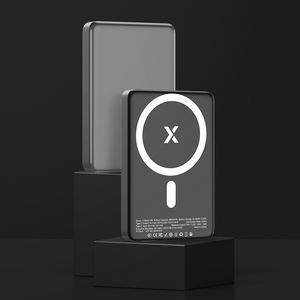
For Casual and Mobile Gamers: XYZtech X Blade 10K

This is the most balanced option for casual and mobile gamers who want reliable power without carrying extra weight.
Pros
- Slim and lightweight for everyday carry
- Wireless + wired charging flexibility
- Strong magnetic hold for phone gaming
- Aluminum alloy body with fireproof materials
- Excellent heat control with NTC temperature protection
Cons
- Not designed for handheld consoles or laptops
- Single-device focus
- Wireless charging is slower than wired charging
For phone-focused players, this is one of the most practical options when looking for the best power bank for gaming on mobile devices.
For Competitive, Handheld & Travel Gamers: INIU B63 25K

Built for sustained performance, this is a serious gamer power bank for handheld and travel gaming.
Pros
- Excellent value for high wattage
- Fast charging for handheld consoles
- Can charge laptops, tablets, and phones
- Strong safety reputation and 3-year warranty
Cons
- Heavier than 10K power banks
- Overkill for phone-only gamers
- No wireless charging
If you travel often or game on handheld consoles, this is one of the best power bank for gaming options that balances power, price, and portability.
For Hardcore & Laptop Gamers: Anker Prime 27K

This is a premium gamer power bank designed for extreme use cases.
Pros
- Powers laptops, phones, and accessories simultaneously
- Extremely fast charging and recharging
- App-based monitoring adds control
- Premium build and reliability
Cons
- Very expensive
- Heavy and bulky
- Not airline-friendly
- Unnecessary for casual gamers
It’s not for everyone, but for demanding setups, it’s among the most capable choices available.
Frequently Asked Questions
Is it safe to charge a Steam Deck with a weaker charger?
Using an underpowered charger won’t always damage a Steam Deck, but it can cause problems depending on how weak the charger is. If the power output can’t meet the device’s minimum charging requirements, the battery may drain faster than it refills or fail to recover properly, which can lead to boot or display issues. For consistent and safe charging, it’s best to use a charger that meets Valve’s recommended wattage so the system can charge steadily without triggering power-related errors.
Is playing games while charging your phone bad?
Gaming while your phone is plugged in isn’t dangerous, but it does put extra stress on the battery. Running demanding games increases heat, and charging at the same time adds even more warmth, which can reduce long-term battery health. Most modern phones manage this with built-in safeguards, but doing it frequently may still shorten how long the battery holds a charge.
Does gaming ruin phone battery?
Playing games doesn’t destroy a phone battery outright, but it can accelerate aging if done heavily and often. Intense apps raise internal temperatures, and excess heat is one of the main reasons batteries lose capacity over time. Older devices and poor-quality chargers are more affected, since worn batteries and unstable power delivery make heat-related wear happen faster.
Final Verdict: Choosing the Right Gamer Power Bank
The best power bank for gaming isn’t about chasing the highest number. It’s about matching capacity, charging speed, and portability to how you actually play.
- XYZtech X Blade 10K (10,000mAh) is the best match if you mainly game on your phone and want something light, slim, and easy to carry every day. It’s ideal for short gaming sessions, daily play, commuting, and mobile games where fast top-ups matter more than raw capacity.
- INIU B63 25K (25,000mAh) is a better choice if you play longer sessions, travel often, or use handheld consoles like the Steam Deck or Nintendo Switch. It offers strong, stable power for gaming while charging and handles multiple devices without becoming impractical to carry.
- Anker Prime 27K (27,650mAh) makes sense for hardcore gamers and laptop users who need high-wattage output for extended sessions. It’s built for multi-device setups and power-hungry gear, but it’s heavier, more expensive, and unnecessary for casual or mobile gamers.
Once you know your gamer type, choosing becomes straightforward. Stick to the capacity and charging speed that match how you actually play, and you’ll avoid carrying extra weight or paying for power you don’t need.
How about you? What do you usually game on, phone, handheld, or laptop? How long are your sessions, and which power bank has worked best for your setup? Sharing your experience might help another gamer make the right call.
Related Articles
Gaming Power Bank: Do You Really Need One? A Gamer’s Guide
Best Power Bank for Steam Deck: Features and Buying Tips
Buying a Portable Charger for Nintendo Switch? Avoid This Mistake
Airline Battery Restrictions Updated: What Travelers Must Know


