

Silicon-Carbon Batteries in Power Banks: Is It Safer, Faster, Better?

If you’ve recently felt like your smartphone’s battery life is finally catching up to your screen time, or if you’ve noticed that new flagship phones are getting thinner while packing more "juice," you’ve likely bumped into the term Silicon-Carbon batteries.
For years, the lithium-ion battery has been the undisputed king of portable power. But as our thirst for 5G, high-refresh-rate screens, and 4K video grows, the traditional "Li-Ion" is starting to sweat. It has hit its graphite ceiling — a physical limit where adding more power requires adding more bulk. From here emerges the silicon-carbon anode, a new technology promising to make our power banks lighter, our charges faster, and our pockets less bulgy.
But as with any technology, skeptics are asking: Does the silicon expansion risk a meltdown? Does the faster charging kill the lifespan? And most importantly, is it actually worth the premium tag? Let’s strip away the hype and look at the raw data to find out if a silicon-carbon battery power bank is a promising next-gen upgrade for you.
Let’s get started!
Silicon-Carbon Batteries: A New Leap in Portable Power
To understand the significance of silicon-carbon technology, we must first look at the battery chemistry that has powered our devices for decades. By examining this silicon-carbon battery vs lithium-ion comparison, we can clearly see where the evolution in portable power truly begins.
The “Old Guard” Graphite
Most power banks and portable electronics today rely on lithium-ion batteries, which operate by shuttling lithium ions between two electrodes: a cathode and an anode. The anode—the negative side—has traditionally been made of graphite.
Graphite has served as the reliable workhorse of the industry. It is stable, predictable, and relatively affordable. But like a studio apartment with limited square footage, graphite can only accommodate so many lithium ions before reaching capacity. This fundamental constraint caps the battery's energy density—the amount of energy it can store relative to its size or weight.
For years, manufacturers have squeezed incremental improvements from this mature technology through better chemistry, enhanced thermal management, and smarter battery management systems. Yet these refinements have only yielded marginal gains. The industry needed a fundamental shift in materials to break through the ceiling, thus the emergence of silicon-carbon batteries.
The Silicon-Carbon (Si-C) Composite
At its core, a Silicon-Carbon battery is still firmly within the lithium-ion family, but with a transformative change at the anode. Rather than relying primarily on graphite, these next-generation batteries incorporate Silicon (Si) into the electrode structure.
Why Silicon (and Why Just Now?)
Silicon offers extraordinary potential because it can theoretically store roughly 10 times more lithium ions than graphite. What graphite does with modest apartment-style capacity, silicon achieves like a multi-story mansion. While engineering realities prevent achieving the full 10x improvement in practice, even partial gains represent meaningful leaps in performance.
However, silicon comes with a notorious drawback. When it absorbs lithium during charging, it expands dramatically—up to 300 percent. This volumetric swelling can crack the anode material, degrade battery integrity, and dramatically shorten lifespan. In extreme cases, this physical degradation can even lead to internal short circuits, which are a primary cause of thermal runaway in battery failures. It is the reason silicon alone has been impractical for consumer electronics; imagine a battery attempting to burst from its casing every time you charge it.
This is where the carbon component becomes essential. Engineers now wrap tiny silicon particles within a protective carbon matrix—a "honeycomb" structure that acts much like steel reinforcing concrete. The carbon framework stabilizes the silicon, managing expansion while preserving structural integrity. The silicon provides the storage muscle; the carbon keeps it from tearing itself apart.
“If silicon's advantages have been understood for years, why hasn’t it been used before?”
The answer lies in the composite breakthrough. Researchers have finally developed reliable methods to harness silicon's power while containing its physical volatility. By embedding nano-scale silicon particles in precisely engineered carbon structures, manufacturers can capture silicon's capacity benefits without suffering its destructive expansion. The timing reflects not a sudden discovery of silicon's potential, but a long-awaited solution to the engineering puzzle that made it commercially viable.
The Core Four: Silicon-Carbon vs. Traditional Lithium-ion
To determine if the Si-C battery is a genuine leap forward, we have to look at the four pillars of battery performance: bulk, velocity, volatility, and longevity. Here is how it stacks up against the graphite veteran in the real world.
1. Energy Density: Is It "Better" (and Smaller)?
The Verdict: Yes, by a landslide.
If you’re a tech-savvy power bank user, you know the struggle: you want 20,000mAh of power, but you don't want to carry a literal brick.
- Traditional Li-ion: Typically tops out at around 200–250 Wh/kg.
- Silicon-Carbon: Commercial versions are already hitting 300–400 Wh/kg, with some lab prototypes pushing even higher.
What this means for you:
A silicon-carbon power bank can be roughly 20% to 40% smaller than its lithium-ion equivalent with the same capacity. Imagine a power bank the size of your current 10,000mAh unit that suddenly holds 15,000mAh. It’s the closest thing to "unlimited pocket space" we’ve seen yet.
2. Charging Speed: Is It "Faster"?
The Verdict: Yes, but with a "but."
Silicon-carbon anodes are inherently better at "soaking up" lithium ions quickly. They have lower internal resistance, which means they can handle higher "C-rates" (the speed at which a battery charges relative to its capacity) without throwing a thermal tantrum.
- The Speed: While traditional lithium-ion batteries often need to be split into two separate cells to achieve ultra-fast charging (like 65W or 100W) safely, silicon-carbon cells can handle high-wattage charging as a single unit.
- The “But”: In a power bank, your speed is still limited by the controller and the USB-C PD protocol. However, the battery itself is no longer the bottleneck. It stays cooler during those high-wattage sessions, which is the holy grail of fast charging. This thermal efficiency is exactly why a silicon-carbon battery power bank can maintain peak performance for longer without the overheating issues commonly associated with traditional packs.
3. Safety: Is It "Safer"?
The Verdict: It’s complicated, but generally yes.
Safety is the #1 pain point for power bank users. We’ve all seen the "spicy pillow" (swollen battery) photos on tech forums.
- The Swelling Myth: There’s a fear that silicon’s tendency to expand makes it a ticking time bomb. In reality, the carbon matrix acts like a mechanical buffer. Modern Si-C batteries often have better thermal stability because they generate less heat during high-current use.
- Smart Management: Because this is premium tech, it is almost always paired with high-end Battery Management Systems (BMS). Brands are using dedicated chips to monitor internal pressure and temperature with AI, making them arguably safer than the generic, bargain-bin Li-ion packs.
4. Lifespan: Do They Last Longer?
The Verdict: This is the trade-off.
Here is the honesty part: Silicon is a high-performance material, and high performance usually comes with a shorter fuse.
- The Cycle Struggle: Traditional graphite anodes are incredibly stable and can handle 1,000 to 2,000 cycles easily. Silicon-carbon battery technology is getting there, but the constant physical expansion/contraction puts more stress on the materials.
- The Perspective: Most commercial Si-C batteries are rated for about 800 to 1,200 cycles. For a power bank, 1,000 charge cycles is still years of daily use. Unless you plan on passing this power bank down to your grandchildren, the "shorter" lifespan is likely a non-issue for the average user.
Silicon-Carbon Battery Power Bank: To Buy or Not to Buy?
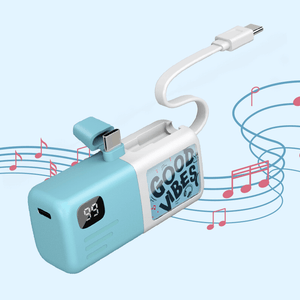
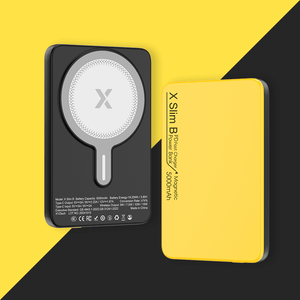
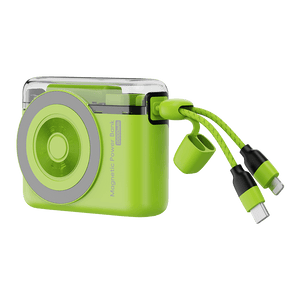
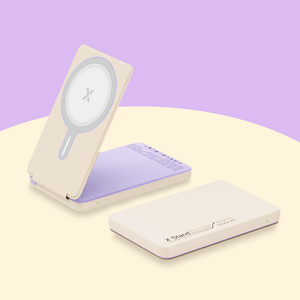
As the "Silicon-Carbon" label appears on more spec sheets—from flagship smartphones to premium power banks—the practical question becomes whether this emerging technology deserves a place in your gear bag. The decision ultimately hinges on your specific usage patterns, priorities, and budget. If you frequently find yourself traveling light or needing multiple device charges without the bulk, investing in a silicon-carbon battery power bank could be the upgrade that finally frees you from outlet anxiety.
You SHOULD buy a Silicon-Carbon power bank if:
- You’re a minimalist: You want the most mAh in the smallest possible footprint (e.g., ultralight hikers, business travelers).
- You need speed: You want a power bank that doesn't feel like a hand warmer when you're 65W fast-charging your laptop.
- You want the "new": You use flagship phones and want a companion that matches their sophisticated tech.
You should STICK to traditional Li-ion if:
- You’re on a budget: Si-C is currently more expensive to manufacture, and those costs are passed to you.
- Size doesn't matter: If you throw your power bank in a backpack and don't care if it weighs 200g or 300g, the extra cost of silicon isn't giving you much value.
- Proven technology: You prefer the reassurance of proven technology with decades of refinement.
Final Thoughts
Silicon-carbon technology isn't just a "tweak" to the batteries we know; it’s the most significant jump in portable energy we've seen in a decade. It offers clear advantages in energy density and performance potential. Silicon-carbon batteries can support faster charging and slimmer designs. Safety and lifespan remain highly competitive, especially when these cells are paired with quality engineering—like the thermal management systems found in a premium silicon-carbon battery power bank.
But it’s not a miracle battery. And it’s not automatically better in every situation.
If you’re a tech-savvy power bank user who values performance and portability, silicon-carbon is worth serious consideration. If you’re happy with your current lithium-ion setup, there’s no urgent need to panic-upgrade.
The smartest move isn’t chasing hype. It’s understanding what you actually need. And now you do.
Frequently Asked Questions
Q: Is the silicon-carbon technology mature enough to be trusted long-term?
Silicon-carbon technology has been under development for years and is already used in some modern consumer electronics. However, it doesn’t yet have the decades-long track record of traditional lithium-ion, so long-term durability depends heavily on the manufacturer’s implementation.
Q: Do silicon-carbon batteries perform better in cold or hot weather?
They generally offer improved thermal stability, but they’re still lithium-based batteries. Performance can still drop in very cold conditions and degrade faster under extreme heat. In normal everyday temperatures, you likely won’t notice a major difference.
Q: Why is silicon-carbon technology more expensive when silicon is so abundant?
The cost doesn't come from the raw silicon itself, but from the complex "nano-engineering" required to create the carbon-bionic matrix that prevents the silicon from swelling. As manufacturing scales up, prices are expected to drop to match traditional lithium-ion levels.


