

20000 mAh Power Bank: How Many Charges Can It Provide?

A 20,000mAh power bank should charge a 5,000mAh phone exactly four times, right? Not quite.
Although the numbers suggest four charges, some energy is lost during charging, so your phone receives less usable energy than the power bank's advertised capacity might suggest.
So, for a 20000 mah power bank, how many charges can you actually expect?
As a rough estimate, a 20,000mAh power bank can provide around 2.5–4 full-charge equivalents for many smartphones through wired charging. The actual number depends on your phone's battery size and charging efficiency.
That makes 20,000mAh a practical option for longer trips, busy days away from an outlet, or charging multiple devices. However, the extra capacity usually comes with more weight, a larger size, and potentially longer recharge times.
In this blog:
- For a 20000 mAh Power Bank, How Many Charges Can You Expect to Get?
- Why Doesn't a 20,000mAh Power Bank Provide Four Exact Charges?
- What Affects How Many Charges You Actually Get?
-
Can a 20,000mAh Power Bank Charge Tablets and Laptops?
- Should You Buy One 20,000mAh Power Bank or Two 10,000mAh Models?
- How Long Will a 20,000mAh Power Bank Last?
- How Long Does It Take to Recharge a 20,000mAh Power Bank?
- Is a 20,000mAh Power Bank Worth It?
- Frequently Asked Questions
Let’s get started!
For a 20000 mAh Power Bank, How Many Charges Can You Expect to Get?
The number of charges mainly depends on your phone's battery capacity. A smaller battery generally needs less energy for a full recharge, allowing the same power bank to charge it more times.
If you're wondering how many phone charges is 20000mah, the table below provides approximate full-charge equivalents for different smartphone battery sizes using wired charging.
|
Phone Battery Capacity |
Estimated Full Charges |
|
3,000mAh |
4–5 charges |
|
3,500mAh |
3.5–4 charges |
|
4,000mAh |
3–3.5 charges |
|
4,500mAh |
2.7–3.1 charges |
|
5,000mAh |
2.4–2.8 charges |
|
6,000mAh |
2–2.3 charges |
These are illustrative estimates rather than guaranteed results. Real performance varies with the power bank’s internal cells and electronics, the phone’s charging system, cable losses, heat, and battery condition.
A full-charge equivalent refers to the total energy needed to recharge a phone's battery once. For example, charging your phone from 50% to 100% twice is roughly equivalent to one full recharge, although actual energy consumption can vary.
Why Doesn't a 20,000mAh Power Bank Provide Four Exact Charges?
Dividing 20,000mAh by a 5,000mAh phone battery gives four charges on paper. However, this calculation overlooks voltage differences and energy lost during charging.
1. The power bank and phone operate at different voltages
A typical 20,000mAh power bank stores energy in internal battery cells rated at approximately 3.7 volts. USB charging delivers power at 5V or higher, depending on the charging method.
The power bank must convert its internal battery voltage to the voltage required for charging. Your phone also manages the incoming power before storing energy in its battery.
Because mAh measures electrical charge rather than total energy, comparing the two battery capacities directly does not provide an accurate charging estimate.
2. Some energy is lost during charging
Voltage conversion, electronic components, and charging cables are not perfectly efficient. Some energy becomes heat instead of being stored in your phone's battery.
Wireless charging can introduce additional losses, especially when the phone is misaligned or becomes warm.
These losses help explain why a power bank cannot deliver all its stored energy to your phone.
Look at Watt-Hours (Wh)
To get an accurate picture, you have to look at Watt-hours (Wh), which measure total energy rather than just electrical charge capacity.
- A standard 20,000mAh battery rated at 3.7V stores approximately 74Wh of energy: 20,000mAh1,0003.7V=74Wh
Because not all 74Wh reaches the phone due to an average 65% to 70% efficiency rate, you can estimate your true expected charges with this simple rule of thumb:
- (Power Bank Capacity × 0.65) ÷ Your Phone's Battery = Actual Full Charges
For example: (20,000mAh × 0.65) ÷ 5,000mAh = 2.6 Charges
What Affects How Many Charges You Actually Get?
When buying a 20000 mah power bank, how many charges you can get also depends on your specific hardware and habits. Even with the same rated capacity, two power banks may deliver different results. The following factors help explain why.
-
Wired versus wireless charging
Wired charging generally transfers energy more efficiently than wireless charging.Wireless charging offers convenience, but heat, positioning, and energy lost during wireless transfer can reduce the number of charges you receive. If maximizing available energy matters most, use a compatible charging cable when practical.
-
Charging several devices
A 20,000mAh power bank can supply multiple devices if it has the necessary ports and output capacity. However, all connected devices draw from the same stored energy.
For example, charging your phone, earbuds, and smartwatch during a trip leaves less energy available for additional phone recharges. Consider your devices' combined charging needs rather than estimating capacity based on your phone alone.
-
Using your phone while charging
Playing games, streaming videos, or running navigation while charging consumes power at the same time the battery is being replenished. Heat can also cause devices to limit charging performance. Let the phone rest when practical, and avoid charging in direct sunlight or inside a hot vehicle.
-
Battery age and product quality
Rechargeable batteries lose capacity as they age. Two power banks with the same rating may also perform differently because of their internal cells and electronics. Reliable product specifications and independent capacity testing are more useful than choosing solely by the largest number on the box.
Can a 20,000mAh Power Bank Charge Tablets and Laptops?
Yes, a 20,000mAh power bank can charge many tablets and some laptops, but the device's charging requirements matter as much as battery capacity.
-
Tablets
Tablets generally have larger batteries than phones, so a 20,000mAh power bank will provide fewer full-charge equivalents. It may still be useful for topping up a tablet during a flight, workday, or trip.
Check the tablet’s charging requirements and the power bank’s output specifications. A power bank with insufficient output may charge slowly or may not be suitable for the device.
-
Laptops
Some laptops can charge from a power bank, but not every 20,000mAh model can charge every laptop. The power bank needs a compatible output, often USB-C Power Delivery, and sufficient wattage for the laptop.
A laptop may also consume power quickly during demanding work. Even if a power bank can connect to it, you may only receive a partial recharge. Before buying, check the laptop’s required input wattage and the power bank’s supported USB-C output profile.
-
Earbuds, watches, and smaller gadgets
Small devices generally require much less energy than phones and tablets. A 20,000mAh power bank can often recharge earbud cases, smartwatches, and similar USB devices multiple times, but exact counts vary by device. Some low-power gadgets may also require a low-current or trickle-charging mode to stay connected.
Should You Buy One 20,000mAh Power Bank or Two 10,000mAh Models?
Both options offer approximately the same advertised total capacity, but they differ in convenience. One 20,000mAh power bank is simpler to manage because you only need to carry and recharge one unit. It can be convenient when you want a single backup battery for travel or multiple devices.
Two 10,000mAh power banks offer more flexibility. You can carry one on shorter outings, keep the second as a backup, or recharge one while using the other. However, two smaller units may cost more, require additional charging connections, and occupy more combined space.
Neither arrangement automatically provides more usable energy. Actual results depend on each power bank's efficiency and specifications.
How Long Will a 20,000mAh Power Bank Last?
It depends on how much energy your devices consume each day.
For example, if you use approximately one full smartphone battery per day and the power bank can provide around 2.7 full-charge equivalents, it may supply roughly two to three days of that charging need.
However, frequent navigation, gaming, mobile hotspot use, or charging several devices can shorten that time considerably.
How Long Does It Take to Recharge a 20,000mAh Power Bank?
A 20,000mAh power bank can take anywhere from 1.5 to 15 hours to fully recharge. The exact time has less to do with the battery size and everything to do with the wattage of your wall charger.
Here is what you can realistically expect:
|
Wall Charger Speed |
Typical Recharge Time |
|
65W or Higher |
Around 1.5–3 hours on supported models |
|
45W |
2.5–3.5 hours |
|
30W |
3–4.5 hours |
|
18–20W |
5–7 hours |
|
10W |
9–12 hours |
These are broad illustrative ranges, not specifications for every 20,000mAh power bank. Actual charging times depend on the model's charging curve, efficiency, and input limits.
Before purchasing, check the power bank's USB-C input rating, not just the output wattage advertised for charging phones and laptops.
Is a 20,000mAh Power Bank Worth It?
For people who frequently spend long periods away from an outlet, it can be. A 20,000mAh model stores considerably more energy than a 10,000mAh power bank, reducing how often you need to recharge the bank itself.
|
Your situation |
Capacity to consider |
|
Occasional emergency phone top-ups |
5,000mAh |
|
Daily commute or ordinary backup |
10,000mAh |
|
Long day with several devices |
10,000–20,000mAh |
|
Multi-day trip or frequent travel |
20,000mAh |
|
Tablet or compatible laptop use |
20,000mAh or more, with suitable output |
The main trade-off is portability. A 20,000mAh power bank is generally bulkier and heavier than a smaller model, and it can take longer to recharge. If you rarely need more than one phone top-up, a smaller bank may be easier to carry and more convenient.
If you regularly travel, use navigation throughout the day, charge multiple gadgets, or cannot reliably access a wall outlet, the extra capacity may be worthwhile.
Frequently Asked Questions
Is a 20,000mAh power bank enough for a 3-day trip?
It may be enough if you mainly charge one smartphone and use your battery carefully, but it is not a guarantee. Navigation, photos, streaming, mobile hotspots, and charging additional devices can use the stored energy more quickly. Estimate your usual daily charging needs and allow extra capacity if you will have limited access to outlets.
Is a 20,000mAh power bank allowed on a plane?
Many 20,000mAh power banks are within common airline carry-on battery limits, but the relevant measure is watt-hours, not mAh alone. A typical 20,000mAh bank rated at 3.7V stores about 74Wh, though you should check the actual label and your airline’s current rules. Power banks generally need to be carried in cabin baggage, and airline restrictions can differ.
Is a 20,000mAh power bank better than a 10,000mAh one?
It provides more stored energy, which is useful for longer trips, multiple devices, or several phone recharges. A 10,000mAh model is usually easier to carry and may be sufficient for everyday backup. The better option is the one that matches your charging needs without adding unnecessary weight.
So, for a 20000 mAh Power Bank, How Many Charges Can It Provide? A Quick Recap
In short, for a 20000 mAh power bank, how many charges you can actually get depends on your phone’s battery capacity, charging method, and the energy lost during conversion. As a rough guide, a 20,000mAh model can provide several wired smartphone charge equivalents, making it a practical option for travel and multiple devices when its output is compatible with what you need to charge.
Key Takeaways
- A 20,000mAh power bank does not deliver its entire rated capacity to your phone.
- Many smartphones may receive around 2.5–4 full-charge equivalents, depending on battery size and conditions.
- Tablets and laptops need compatible charging output, not just a high mAh rating.
- Larger capacity means more stored energy but usually more bulk and longer recharge time.
- Choose 20,000mAh when you genuinely need extra endurance or need to charge several devices.
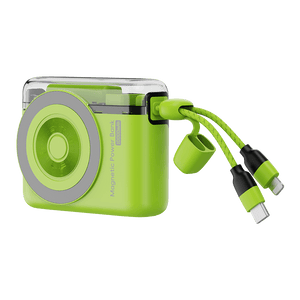
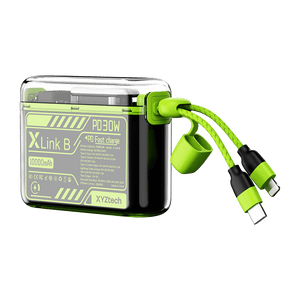
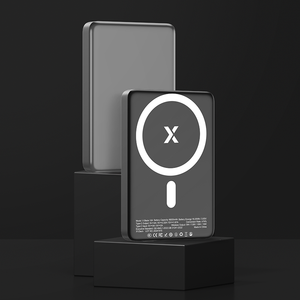
A larger power bank is most useful when its extra capacity solves a real problem, such as getting through a long trip without an outlet. For everyday backup, compare the convenience of smaller XYZtech 5,000mAh and 10,000mAh options with the capacity you need, rather than automatically choosing the biggest model.
Sources and further reading: Check the battery and charging specifications published by your phone, tablet, laptop, and power bank manufacturers. For air travel, consult the airline and relevant aviation authority rules in effect for your journey.
Related Articles
What is mAh in Power Banks? Choosing Your Ideal mAh Capacity
How to Convert mAh to Watt-Hour and Why It Matters


