

10000 mAh Power Bank: How Many Charges Can You Expect?

If your phone has a 5,000mAh battery, shouldn't a 10,000mAh power bank charge it twice?
Not necessarily. A 10,000mAh power bank typically provides around 1.5 to 2 full charges for many smartphones, depending on the phone's battery size and charging efficiency. Phones with larger batteries may get closer to one full charge plus an additional top-up, while smaller phones can get more.
That doesn't automatically mean your power bank is faulty or its advertised capacity is misleading. Some energy is lost when transferring power from the bank to your phone.
So, for a 10000 mAh power bank, how many charges can you realistically expect? Let's check why actual results vary, and how to decide whether this capacity is enough for you.
In this blog:
- For a 10000 mAh Power Bank, How Many Charges Can You Get?
- Why Doesn't a 10,000mAh Power Bank Deliver 10,000mAh to Your Phone?
- Wired vs. Wireless: Which Gives You More Charges?
- What Else Affects the Number of Charges?
- Is a 10,000mAh Powerbank Enough?
- How to Estimate Your Own Number of Charges
- Frequently Asked Questions
Let’s get started!
For a 10000 mAh Power Bank, How Many Charges Can You Get?
Your phone’s battery size is one of the biggest factors. The table below gives broad estimates for wired charging from a fully charged power bank.
| Phone Battery Capacity | Estimated Full Charges |
| 3,000mAh | 6,000mAh |
| 3,500mAh | 1.7–2 charges |
| 4,000mAh | 1.5–1.8 charges |
| 4,500mAh | 1.3–1.6 charges |
| 5,000mAh | 1.2–1.4 charges |
| 6,000mAh | Around 1 charge |
Please note that these are planning estimates, not guaranteed test results.
For a 10,000 mAh, how many charges it can provide depends on the cells and electronics inside the power bank, voltage conversion, cable, phone charging system, and whether the phone is being used while charging.
For example, a 10,000mAh bank may recharge a 5,000mAh phone once and still have some energy left. It may not provide another complete recharge. With a smaller 3,000mAh battery, two full charges may be possible under favorable conditions.
A full-charge equivalent is also different from the number of times you can plug in. If you recharge from 40% to 80% several times, you may get multiple top-ups even though the total energy adds up to less than two full charges.
Why Doesn't a 10,000mAh Power Bank Deliver 10,000mAh to Your Phone?
The advertised capacity usually describes the internal battery cells, not the amount of charge that ultimately enters your phone battery.
For a 10,000 mAh, how many charges to expect also depends on voltage conversion. Power banks commonly store energy at a nominal voltage around 3.7V. USB output is typically 5V or may use a higher voltage for compatible fast charging. The power bank’s electronics convert the stored energy to the required output, and some energy is lost as heat during the process.
That is why mAh figures should not always be compared directly across batteries with different voltages. Watt-hours (Wh) measure energy and make those comparisons more meaningful.
- For example, a 10,000mAh power bank with cells rated at 3.7V stores approximately 37Wh: 10,000mAh ÷ 1,000 × 3.7V = 37Wh
That does not mean all 37Wh reaches your phone. Conversion losses, cable resistance, the phone’s charging electronics, and heat reduce the amount available for charging. The usable amount varies by product, so avoid treating one fixed efficiency percentage as universal. You can learn more here: How to Convert mAh to Watt-Hour and Why It Matters
Wired vs. Wireless: Which Gives You More Charges?
If you are planning to buy a 10000 mAh power bank, how many charges you can get also depends if you are using a wired or wireless one.
- Wired charging generally makes better use of the power bank’s stored energy because wireless charging can lose more energy during transfer, particularly when the phone and charger are poorly aligned or heat builds up.
- Wireless charging may still be worth it if convenience matters more than maximizing the number of charges. Magnetic wireless power banks can be useful for quick top-ups without a cable, but the same capacity may provide fewer full-charge equivalents wirelessly than through a cable.
If your priority is getting the most backup power from a 10,000mAh bank, use a compatible cable when practical and avoid charging in hot conditions. You can learn more here: Wired vs Wireless Charging: Which Method Should You Choose?
What Else Affects the Number of Charges?
Aside from the battery size itself, external factors like your settings, the environment, and how you use your devices change how much power actually reaches your phone.
-
Using your phone while charging
Gaming, streaming, video calls, and navigation consume power while the phone is connected. Some of the incoming energy runs those activities instead of replenishing the battery. Letting the phone sit idle or using it lightly can help preserve the power bank’s charge.
-
Heat and temperature
High temperatures can cause a phone or power bank to reduce charging performance. Avoid leaving either device in direct sunlight or a hot vehicle. If a device becomes unusually hot, disconnect it and allow it to cool.
-
Battery age and product quality
Rechargeable batteries gradually lose capacity with use and age. A power bank that has been used for years may deliver less energy than it did when new. Products with the same advertised capacity can also differ in cell quality and internal electronics, so specifications and reliable independent testing are more useful than the mAh number alone.
-
Output wattage and cable compatibility
Wattage mainly affects how quickly a compatible device can charge. A higher-wattage power bank does not automatically provide more total charges than a lower-wattage model with the same stored energy. Use a suitable cable and confirm that the power bank supports your phone’s charging standard.
Is a 10,000mAh Powerbank Enough?
For many people, yes. A 10,000mAh power bank is a practical middle ground: it usually offers more backup than a pocket-sized 5,000mAh model without the extra bulk of a 20,000mAh unit.
| Your situation | Capacity to consider |
| Occasional emergency top-ups | 5,000mAh |
| Daily commute, school, or work | 10,000mAh |
| Long day with a phone and earbuds | 10,000mAh or more |
| Multiple phones or extended trips | 20,000mAh |
| Tablet or compatible laptop | Tablet or compatible laptop |
10,000mAh bank is often enough if you need to recharge one phone during the day or keep smaller USB devices topped up. If you spend several days away from an outlet or regularly charge multiple devices, the additional capacity of a 20,000mAh model may be worth the extra size and weight.
How to Estimate Your Own Number of Charges
For a quick estimate, start with the power bank’s rated capacity and use a cautious assumption for the amount available to charge your phone. Then divide by your phone’s battery capacity. Remember that this shortcut is only approximate because mAh values can refer to batteries operating at different voltages.
- For example, suppose you estimate that 6,500mAh of equivalent usable capacity is available from a particular 10,000mAh bank: 6,500 ÷ 4,000 = about 1.6 full-charge equivalents
This is a rough planning figure, not a promise. If you want a more accurate comparison, use watt-hours for both batteries and account for the power bank’s real-world conversion efficiency.
Frequently Asked Questions
Which power bank is better, 10000mAh or 20000mAh?
A 10,000mAh model is easier to carry and usually suits everyday phone backup, while a 20,000mAh model stores substantially more energy for long trips or several devices. Neither is automatically better: the right choice depends on how often you have access to an outlet, how much weight you want to carry, and what you need to charge.
Is a 10000mAh powerbank enough?
For many smartphone owners, it is enough for a long day or one or more partial recharges, and it may provide around one to two full-charge equivalents depending on the phone. If you routinely charge several devices or spend extended periods away from electricity, a larger model may be more practical. Check output compatibility too, especially for tablets and laptops.
How many hours to charge a 10000mAh powerbank?
Recharge time depends on the power bank’s maximum input rating, the charger, cable, and charging conditions. A model that supports higher input power may recharge faster, but it will not necessarily accept the full wattage printed on a wall adapter. Check the product specifications for its supported input and estimated recharge time
So, for a 10000 mAh Power Bank, How Many Charges Can You Get? A Quick Recap
Bottomline is, for a 10000 mAh power bank, how many charges you can expect to get depends on the phone’s battery size, the power bank’s efficiency, and whether you charge by cable or wirelessly. For many smartphones, roughly 1.2–2 full-charge equivalents through wired charging is a reasonable planning range, not a guarantee.
Key Takeaways
- A 10,000mAh power bank does not deliver all its rated capacity to your phone.
- Smaller phone batteries generally receive more full-charge equivalents.
- Wired charging usually conserves more energy than wireless charging.
- Output wattage affects charging speed, not automatically the total number of charges.
- Choose 10,000mAh for everyday backup and consider 20,000mAh for longer trips or multiple devices.
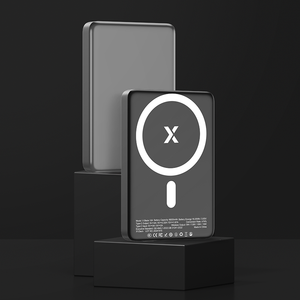
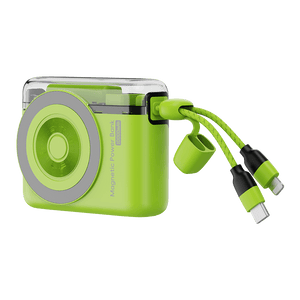
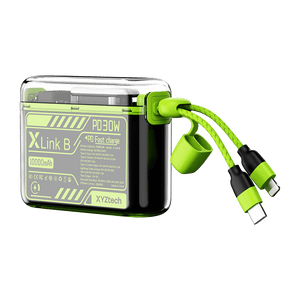
A 10,000mAh power bank is a useful balance between portability and capacity for many people. If you’re comparing everyday backup options, XYZtech’s 5,000mAh and 10,000mAh power banks may be worth considering alongside your phone’s battery size and charging needs.
Sources and further reading: Consult the technical specifications for your phone and power bank, especially their battery capacity, input/output ratings, and supported charging standards. Independent capacity testing can help compare products with the same advertised rating.
Related Articles
What is mAh in Power Banks? Choosing Your Ideal mAh Capacity
How to Convert mAh to Watt-Hour and Why It Matters
Top 10000mAh Power Bank Comparison: Features, Pros & Cons


