

5000mAh Power Bank: How Many Charges Can You Get?

The capacity printed on a power bank doesn't tell you exactly how much energy will reach your phone.
So, for a 5000mAh power bank, how many charges can you realistically expect?
For most smartphones, a compact 5000mAh power bank provides roughly 0.7 to 1.2 full charges when connected by cable, depending on your phone's battery size and the power bank's efficiency. Some smaller phones may get more, while phones with larger batteries may receive only a partial charge.
Here's how to estimate your own results and decide whether this small power bank is right for your needs.
In this blog:
- So, How Many Charges Is 5000mAh?
- Why Doesn't it Deliver the Full 5,000mAh?
- What Affects How Many Phone Charges You Get?
- Is a 5,000mAh Power Bank Enough for Daily Use?
- How Can You Estimate Your Own Number of Charges?
- Frequently Asked Questions
Let’s get started!
So, How Many Charges Is 5000mAh?
The answer to how many charges is 5000mah power bank can provide depends primarily on your phone's battery size and whether you're charging it by cable or wirelessly.
For a wired connection, a reasonable estimate is that around 70–85% of the power bank's stored energy may be delivered usefully, although actual efficiency varies by model and charging conditions.
Use these figures as rough planning estimates, not guaranteed results.
| Phone battery capacity | Approximate full-charge equivalents |
| 2,500mAh | 1.2–1.6 |
| 3,000mAh | 1.0–1.3 |
| 3,500mAh | 0.9–1.1 |
| 4,000mAh | 0.8–1.0 |
| 4,500mAh | 0.7–0.9 |
| 5,000mAh | 0.6–0.8 |
Actual results can fall outside these ranges.
Battery capacity in mAh alone does not account for differences in voltage, conversion efficiency, cable losses, heat, or battery condition.
For example, if your phone has a 4,000mAh battery, a 5,000mAh power bank may bring it close to a full charge, but you should not assume it will take the phone from empty to 100%. If you only need to move from 20% to 70%, however, the same power bank may provide a very useful boost.
Why Doesn't it Deliver the Full 5,000mAh?
The rating on a power bank describes the capacity of its internal battery cells. It does not mean that exactly 5,000mAh will be delivered to your phone. Three main things explain the difference:
- Voltage conversion: The power bank must convert the voltage from its internal battery to a level suitable for your phone.
- Charging losses: The power bank's electronics, cable, and phone charging circuitry consume some energy, often as heat.
- Energy left unused: Safety controls may stop the power bank from discharging completely.
The power bank stores energy at its internal battery voltage, commonly around 3.7 volts nominally. It then converts that energy to the voltage required by its USB output. The conversion process, charging electronics, cable, and phone all contribute to energy losses.
- Watt-hours (Wh) provide a more useful way to compare stored energy across different voltages: Energy in Wh = battery capacity in Ah × nominal voltage
For example, a 5,000mAh cell at 3.7V stores about 18.5Wh. Some of that energy is lost before it becomes stored energy inside the phone. The actual usable amount varies by product and charging conditions, so a single efficiency figure should be treated as an estimate rather than a rule.
These losses are expected. They don't automatically mean your power bank is defective.
What Affects How Many Phone Charges You Get?
If you are planning to get a 5000mAh power bank, how many charges you expect it to provide depends entirely on your charging habits and hardware.
-
Wired or wireless charging
Wired charging generally delivers more of the stored energy to your phone than wireless charging because wireless transfer can lose additional energy as heat. If getting the most from a small power bank is your priority, use a compatible cable when practical.
-
Using your phone while charging
Navigation, gaming, video streaming, and other demanding activities use power while the phone is connected. This means less incoming energy is available to refill the battery. Let the screen turn off or limit demanding apps if you want to conserve the power bank.
-
Heat and battery age
Excessive heat can cause a phone to reduce charging speed, while repeated use gradually wears down rechargeable cells. An older power bank may hold less energy than it did when new. Keep it away from direct sunlight and hot cars, and replace it if it becomes swollen, damaged, or unusually hot.
-
The power bank and cable themselves
Two power banks with the same advertised capacity may perform differently because of their cells and internal electronics. Use a reputable model and a cable that supports the required charging rate. A higher wattage rating can improve charging speed when supported, but it does not automatically mean more total charges.
Is a 5,000mAh Power Bank Enough for Daily Use?
For some people, absolutely. For others, it may feel too limited.
A 5,000mAh power bank makes sense if you want something lightweight that fits easily in a pocket or small bag. It's useful for commuting, short outings, emergencies, and giving your phone enough power to last until you reach an outlet.
However, it may not be sufficient if you use your phone heavily, travel for long periods, or need multiple full charges throughout the day.
Here's a simple comparison to help you decide:
| Capacity | Best suited for |
| 5,000mAh | Emergency backup, everyday top-ups, and lightweight carry |
| 10,000mAh | Longer days out and more substantial phone charging |
| 20,000mAh | Multiple devices, extended travel, and several phone charges |
A larger capacity is more suitable if you regularly use GPS for hours, play mobile games, travel all day, or need to recharge multiple devices. A 10,000mAh power bank generally offers more flexibility for daily use, while a 20,000mAh model is better suited to longer trips or several devices.
Think about the situation you want to cover. If a compact power bank can reliably give you enough extra battery to get home or finish your day, carrying less may be more convenient than taking a larger model everywhere.
How Can You Estimate Your Own Number of Charges?
For a quick estimate, first check your phone’s battery capacity. Then use the expected usable energy of your power bank rather than assuming the entire rated capacity reaches the phone.
- For example, if you assume about 3,500mAh of equivalent usable capacity from a particular 5,000mAh power bank: 3,500 ÷ 4,000 = 0.875 full-charge equivalents
That is roughly 88% of a 4,000mAh battery’s capacity, not a promise that your phone will gain exactly 88 percentage points. The actual result also depends on the phone’s charging system, its starting battery level, and how much power it uses while connected.
Frequently Asked Questions
How long will a 5,000mAh powerbank last?
A 5,000mAh power bank can provide a useful top-up for many smartphones and may deliver close to one full-charge equivalent, depending on the phone and charging losses. Smaller phones may receive more backup, while phones with larger batteries may get less. How long that extra battery lasts in everyday use depends on screen brightness, signal strength, apps, and how heavily you use the phone.
How long does it take to fully charge a 5000mah battery?
Recharging a 5,000mAh power bank often takes a few hours, but the exact time depends on its maximum input rating, the charger, cable, and charging conditions. A power bank that supports faster USB-C input may recharge more quickly than one with a slower input port. Check the product’s input specifications rather than relying only on the wattage printed on your wall charger.
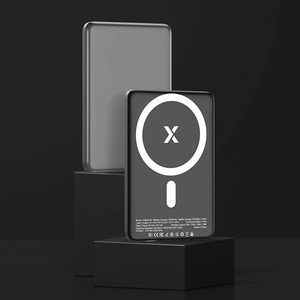
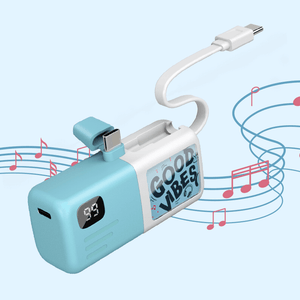
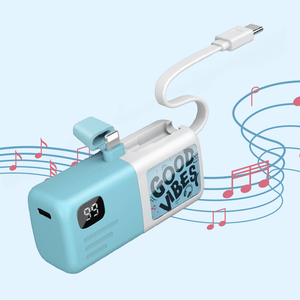
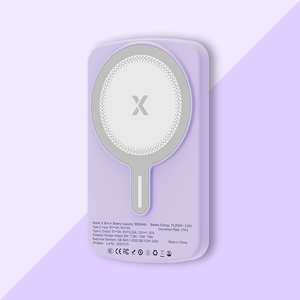
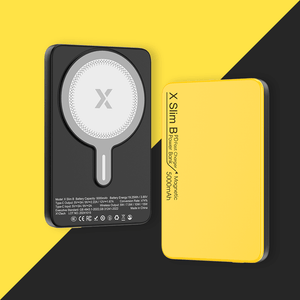
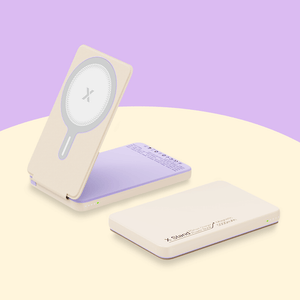
So, for a 5000mAh Power Bank, How Many Charges Can It Provide? A Quick Recap
For a 5000mah power bank, how many charges you can get depends on the phone’s battery size and how much energy is lost during charging. For many smartphones, expect a useful top-up or roughly 0.7–1.2 full-charge equivalents through wired charging, rather than a guaranteed complete recharge.
Key Takeaways
- A 5,000mAh rating does not mean all 5,000mAh reaches your phone.
- Smaller phone batteries generally get more full-charge equivalents.
- Wired charging usually makes better use of the power bank’s stored energy than wireless charging.
- Compact 5,000mAh models are best for emergency backup and everyday top-ups.
- Consider 10,000mAh or more if you need longer-lasting backup or charge multiple devices.
A small power bank can be enough when portability matters more than getting several complete charges. If you’re comparing compact backup options, XYZtech’s 5,000mAh and 10,000mAh power banks are worth considering based on how much extra battery you typically need.
Sources and further reading: Check the technical specifications and rated capacity of the specific power bank and phone you use. Manufacturer documentation for the devices is more reliable than assuming all products with the same mAh rating perform identically.
Related Articles
What is mAh in Power Banks? Choosing Your Ideal mAh Capacity
How to Convert mAh to Watt-Hour and Why It Matters
5,000 mAh Power Bank Comparison: Our Top 3 Picks for 2025


