

GaN Charger vs PD Charger: The Mistake Most Buyers Make

Most people compare GaN and PD chargers the wrong way, and that can lead to buying the wrong charger.
If you’ve been searching GaN charger vs PD charger, you’ve probably seen conflicting advice saying one is faster, safer, or better for battery health than the other. The confusion comes from the fact that these terms describe two different parts of a charger. GaN refers to the hardware material inside the charger, while PD (Power Delivery) refers to the charging technology that controls how power is delivered.
In other words, the real GaN vs PD charger question isn’t about choosing one instead of the other. A modern charger can include both GaN technology and USB Power Delivery, and in many cases, that combination is actually the best option.
This guide explains the difference in simple terms, when each matters, and which charger makes the most sense for your phone, tablet, laptop, or travel setup.
In this blog:
- Understanding GaN Charger vs PD Charger
- GaN vs PD Charger: The Key Difference
- Does GaN Improve Battery Health?
- When a PD Charger Is Enough
- When a GaN Charger Is Worth It
- The Best Choice: A GaN PD Charger
- What Not to Do When Shopping for A Charger
- Frequently Asked Questions
Let’s get started!
Understanding GaN Charger vs PD Charger
The easiest way to understand GaN charger vs PD charger is to think of a charger as having a body and a brain.
- GaN (Gallium Nitride) as the body is the material used to build the charger’s internal components.
- PD (Power Delivery) as the brain is the charging protocol that allows the charger and your device to communicate.
They work together rather than replacing each other. This is why many people asking about GaN vs PD charger are actually comparing two things that are designed to complement one another.
So, What Is a GaN Charger?
A GaN charger is built using Gallium Nitride, a semiconductor material that has become popular because it is more efficient than traditional silicon.
Why GaN chargers are different
Because GaN handles electricity more efficiently, manufacturers can build chargers that are smaller, lighter, and cooler-running than older silicon chargers with the same power output.
A GaN charger can often provide:
- A more compact design
- Less heat during charging
- Better energy efficiency
- Higher power output in a smaller charger body
The key benefit is not that GaN magically charges your phone faster. Instead, it allows manufacturers to build high-power chargers in a much smaller package.
Does GaN Improve Battery Health?
In practical terms, GaN does not significantly improve your phone’s battery lifespan simply because it uses GaN technology.
Your phone controls how much power it accepts. A PD-compatible phone connected to a PD charger, whether that charger is built with GaN or silicon, will generally charge according to the phone’s battery management system.
What GaN does improve is the charger’s efficiency. The charger itself tends to produce less waste heat and can remain cooler during use. That is beneficial for the charger, but it does not magically make your phone battery healthier.
What Is a PD Charger?
A PD charger uses USB Power Delivery (USB PD), a fast-charging standard designed for USB-C devices. Instead of sending the same amount of power all the time, a PD charger communicates with your device and delivers only the amount of power the device can safely accept.
How PD charging works
When you plug in a compatible phone, tablet, or laptop, the charger and device perform a quick “handshake.” They negotiate the appropriate voltage and current, allowing the device to charge as quickly and safely as possible.
PD chargers are commonly used for iPhones, Android phones, iPads and tablets, MacBooks, Windows laptops, Nintendo Switch, and other USB-C devices.
USB Power Delivery is built around the USB-C standard, so both the charger and the device generally need USB-C support to use PD fast charging. A charger labeled “PD” is a charger that supports this smart power negotiation system.
GaN vs PD Charger: The Key Difference
This is the part that clears up most of the confusion.

A charger can be:
- Silicon + PD - A large, heavy charging brick that fast-charges devices but generates a lot of heat.
- GaN + PD - An extremely small, cool-running charger that safely powers up phones and laptops at maximum speed.
- GaN without PD - A compact but specialized charger that only fast-charges specific smartphone brands using proprietary rules.
- Silicon without PD - An old-school, slow charger like the classic small iPhone cube that cannot communicate with your device.
The most useful modern chargers are usually GaN + PD chargers because they combine compact hardware with smart fast-charging technology.
When a PD Charger Is Enough
If you already own a USB-C PD charger that charges your phone or tablet quickly, there is usually no need to replace it immediately. A GaN charger is mostly an upgrade in size, efficiency, and portability rather than a dramatic improvement in charging speed.
Choose a PD charger if:
- You mainly charge a smartphone
- You charge overnight
- Portability is not important
- You want a lower-cost option
- You already have a reliable USB-C PD charger
For many users, a quality 20W–30W PD charger is perfectly adequate for daily phone charging.
When a GaN Charger Is Worth It
A GaN charger becomes especially useful when portability and higher power matter. Choose a GaN charger if:
- You travel frequently
- You carry multiple devices
- You want a smaller charger in your bag
- You charge laptops, tablets, and phones from one charger
- You need 45W, 65W, or 100W+ charging
For example, a 65W GaN PD charger can often charge a laptop and a phone simultaneously while remaining much smaller than older laptop chargers.
The Best Choice: A GaN PD Charger
If you have modern devices, the answer to GaN charger vs PD charger is often both. A GaN PD charger gives you:
- Fast charging through USB Power Delivery
- A compact travel-friendly design
- Better energy efficiency
- Less heat generated by the charger
- The ability to charge multiple USB-C devices from one charger
This is why most premium chargers from major brands advertise both “GaN” and “PD” on the packaging. For most people buying a new charger today, a GaN PD charger offers the best balance of speed, portability, efficiency, and long-term versatility.
What Not to Do When Shopping for A Charger
When shopping for a charger, avoid a few common mistakes.
- Don’t assume every GaN charger supports PD
Some GaN chargers may support other charging standards instead of USB Power Delivery. Always check that PD or Power Delivery is specifically listed if you want fast charging for modern USB-C devices.
- Don’t buy excessive wattage unnecessarily
A 140W charger will not force a phone to charge at 140W. Your phone will only draw the power it is designed to accept.
- Don’t ignore cable quality
A high-quality USB-C cable is important for reliable fast charging. A low-quality or damaged cable can reduce charging performance even if the charger supports PD.
Frequently Asked Questions
Does Apple use GaN chargers?
Yes, Apple uses Gallium Nitride technology in some of its higher-wattage USB-C power adapters, including models such as the 70W and 140W adapters. Many of Apple’s older or lower-power chargers still use traditional silicon components. The presence of GaN depends on the specific adapter model rather than the Apple brand itself.
Is a GaN charger better?
A GaN charger is generally a better option than a traditional silicon charger because it is smaller, lighter, and more energy efficient. It can deliver high power while producing less waste heat, which makes it especially useful for travel and multi-device charging. The charging speed, however, still depends on the charger’s wattage and supported charging protocol.
Is PD charging safe for my phone?
USB Power Delivery is designed with safety in mind and is widely used by major phone manufacturers. A PD charger and a compatible device communicate before charging begins, allowing the charger to provide only the amount of power the device can safely handle. This negotiation process helps protect the battery and charging circuitry during everyday use.
Do GaN chargers overheat?
GaN chargers can become warm during operation, especially when delivering high power for extended periods. They are usually more efficient than older silicon chargers, so they tend to generate less excess heat overall. A charger that becomes warm to the touch is often operating normally, but excessive heat or burning smells should be treated as a warning sign.
GaN Charger vs PD Charger: The Bottom Line
Choosing between GaN charger vs PD charger is much easier once you understand that they are not competing technologies. GaN is the hardware that makes chargers smaller, cooler, and more efficient, while PD is the charging technology that allows compatible devices to charge quickly and safely. For most people using modern USB-C phones, tablets, or laptops, a GaN PD charger offers the best combination of portability, speed, and long-term convenience.
Key Takeaways
- GaN is the hardware material; PD is the charging protocol.
- A GaN charger is not automatically faster than a PD charger.
- The best option for most users is a GaN PD charger that combines both technologies.
- PD support matters more than GaN if fast charging compatibility is your priority.
- GaN is most valuable when you want a compact, travel-friendly charger with high power output.
If you’re upgrading your charging setup, a GaN PD charger is usually the smartest long-term purchase because it combines compact design with fast and safe charging for phones, tablets, and laptops.
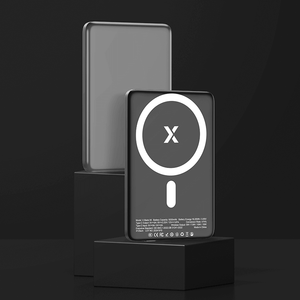
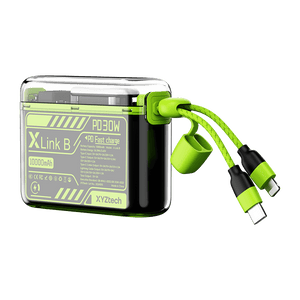
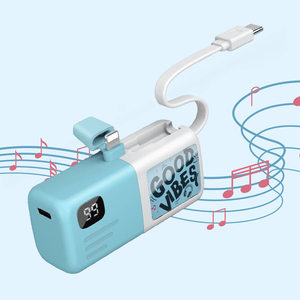
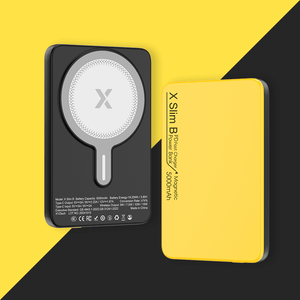
And if you need reliable power while traveling or during busy days away from an outlet, our XYZtech 5,000mAh and 10,000mAh power banks pair perfectly with USB-C PD devices, giving you a portable backup power solution that complements the same fast-charging technology discussed in this guide.
Related Articles
Supercharge with GaN Technology: The Rise of GaN Power Banks
What is USB PD? How It Works, Features, and Impact on Charging


