

Power Bank vs Portable Charger: Are They the Same or Different?

Every power bank is a portable charger, but not every portable charger is a power bank.
Many people assume they're comparing two different products when searching for power bank vs. portable charger. In reality, most retailers and manufacturers use the terms interchangeably. Both refer to devices that store power and charge your phone, tablet, earbuds, and other gadgets when you're away from a wall outlet.
That said, there are some subtle differences in how the terms are used. Understanding them can make shopping easier and help you choose the right charging solution for your needs.
Today, we'll explain the difference between portable charger and power bank, their pros and cons, and which option is best for different types of users.
In this blog:
- Power Bank vs Portable Charger: Are They the Same Thing?
- Difference Between Portable Charger and Power Bank in Marketing
- So, What Are The Other Types of Portable Chargers?
- Pros and Cons of Using a Portable Charger
- What to Consider Before Buying a Portable Charger
- What Not to Do When Choosing a Portable Charger
- Frequently Asked Questions
Let’s get started!
Power Bank vs Portable Charger: Are They the Same Thing?
Most of the time, yes. For most people, a power bank and a portable charger are the same thing. The easiest way to think about the difference between portable charger and power bank is using a simple analogy:
- Portable Charger is like a drink container. It is a broad category. It includes water bottles, thermoses, juice boxes, and flasks.
-
Power Bank is specifically like a plastic water bottle. It is the most common type of drink container you buy at the store.
Power Bank vs Portable Charger: A Quick Comparison
|
Feature |
Power Bank |
Portable Charger |
|
Definition |
A standalone battery brick that stores power. |
Any mobile device that juices up your tech. |
|
How it powers |
Must be pre-charged from a wall socket. |
Can use stored power, solar energy, or car outlets. |
|
Examples |
Anker 737 Power Bank, XYZtech 10K Wireless Power Bank |
Battery cases, solar panels, car chargers, power banks. |
In short, every power bank is a portable charger, but not every portable charger is a power bank. However, when shopping online, a product labeled "portable charger" is almost always a standard power bank.
Difference Between Portable Charger and Power Bank in Marketing
Why Do Companies Use Different Names?
The difference between portable charger and power bank comes down to marketing rather than functionality.
Some brands prefer the term "power bank" because it sounds more technical and accurately describes a battery storage device.
Others use "portable charger" because it immediately tells customers what the product does. Someone unfamiliar with the term power bank may instantly understand what a portable charger is.
As a result, consumers frequently encounter both names and assume there must be a major difference when there often isn't.
So, What Are The Other Types of Portable Chargers?
To understand more the difference between a power bank vs portable charger, you have to look at the broader ecosystem. While a standard power bank is the most common example of a portable charger, several other popular types are engineered for different situations, devices, and users:
Battery Cases
A smartphone protective case with an integrated, form-fitting battery built right into the back.
- What it does: Slides onto your phone and continuously feeds power through the built-in charging connector, bypassing loose wires entirely.
- Best to use when: Long, active days with heavy screen time (e.g., all-day music festivals, theme parks, or shooting vlogs).
- What for: Extending your specific smartphone's battery life while acting as a shockproof shield against drops.
- For whom: Power users who want zero pocket clutter and hate carrying external items or cables in their bags.
Magnetic Wireless Packs
Sleek, brickless charging tiles that use arrays of built-in magnets to clip onto the rear of your phone.
- What they do: Transfer power completely wirelessly using magnetic alignment standards (like MagSafe or Qi2 technology).
- Best to use when: Commuting on trains, multitasking at coffee shop tables, or talking on the phone while needing a charge.
- What for: Cable-free charging for compatible iPhones and Android devices.
- For whom: Tech enthusiasts who prioritize convenience, comfort, and cord-free mobility.
Hybrid Wall Charger Power Banks
An ingenious "2-in-1" device that fuses a standard wall adapter plug with an internal backup battery.
- What they do: Plugs directly into a wall outlet to charge your connected devices like a normal charging brick, while simultaneously filling its own internal battery reservoir. Once unplugged, it acts as a portable power bank.
- Best to use when: Traveling, staying in hotel rooms, or packing light for weekend business trips.
- What for: Reducing the number of cables and blocks you have to pack by handling stationary and mobile power in one unit.
- For whom: Frequent flyers, business travelers, and minimalists.
Portable Jump Starters
Heavy-duty, high-amperage battery packs equipped with specialized jumper cable clamps.
- What they do: Deliver an intense surge of peak electrical current to jump-start a dead 12V vehicle battery, while also featuring standard USB ports to charge phones and tablets.
- Best to use when: Your car battery dies in a remote parking lot or during cold winter mornings.
- What for: Reviving cars, trucks, motorcycles, or boats without needing a second vehicle.
- For whom: Drivers, road-trippers, and anyone building a vehicular emergency safety kit
Solar Chargers
Ruggedized, outdoor-ready battery packs or foldable panels lines with solar cells.
- What they do: Harvest natural sunlight to generate electrical energy, slowly replenishing their own capacity or directly powering attached gadgets.
- Best to use when: Off-grid camping, multi-day hiking expeditions, or during prolonged residential power outages.
- What for: Recharging communication devices, GPS units, and headlamps away from the grid.
- For whom: Backpackers, survivalists, campers, and disaster preparedness planners.
Pros and Cons of Using a Portable Charger
Since most power banks and portable chargers are the same product, it's more useful to evaluate their overall advantages and disadvantages rather than treating them separately.
Pros
- Charge Devices Anywhere. The biggest benefit is freedom from wall outlets. Whether you're traveling, commuting, studying, or attending an event, you can recharge your devices almost anywhere.
- Great for Travel. Long flights, road trips, and outdoor activities can quickly drain your phone battery. A portable charging solution helps keep important devices powered when outlets aren't available.
- Support Multiple Devices. Many modern models can charge more than one device at a time, making them useful for people who carry smartphones, earbuds, tablets, smartwatches, or laptops.
- Emergency Backup Power. A dead phone battery can be inconvenient or even stressful in certain situations. Having backup power available can provide peace of mind during emergencies.
Cons
- They Need Recharging Too. A portable charger isn't an endless power source. Once its battery is depleted, it must be recharged before it can be used again.
- Larger Capacity Means More Weight. Higher-capacity models provide more charging power but are usually heavier and less pocket-friendly.
- Battery Performance Declines Over Time. Like all rechargeable batteries, power banks gradually lose some capacity after years of use.
What to Consider Before Buying a Portable Charger
Deciding on the right portable charger comes down to how you use your devices throughout the day, not just specs on paper. Because portable power comes in many forms, from slim magnetic packs to heavy-duty bricks, you need to align the features with your lifestyle and needs.
Battery Capacity
Capacity is measured in milliamp-hours (mAh) and determines how much energy the charger holds.
- 5,000mAh: Best for slim battery cases or magnetic clips; offers emergency backup power.
- 10,000mAh: Best for everyday use; typically provides 1.5 to 2 full phone charges.
- 20,000mAh: Best for weekend trips; can power phones multiple times or charge tablets.
- 30,000mAh and above: Best for heavy users, remote work, and charging laptops.
Airline Regulations
If you travel by plane, aviation authorities like the FAA have strict safety rules for lithium-ion batteries:
- Carry-on only: Portable chargers must never go into checked luggage due to fire risks.
- The 100Wh Limit: You can freely bring chargers up to 100 Watt-hours. For standard portable batteries, this equals roughly 27,000mAh.
- Special Permission Needed: Anything between 101Wh and 160Wh requires airline approval before flying, and anything over 160Wh is completely banned.
- Banned Limits: Anything over 160Wh is completely banned from passenger aircraft.
Learn more here: Airline Battery Restrictions Updated: What Travelers Must Know
Charging Speed & Technology
A large capacity is only useful if it can transfer power quickly. Look for these essential fast-charging standards:
- USB-C Power Delivery (PD): The modern standard required to fast-charge newer iPhones, Androids, and laptops.
- Wireless / Qi2 Compatibility: Crucial if you are choosing a magnetic pack or wireless charging stand.
- Pass-Through Charging: Allows the portable charger to power your phone while the charger itself is plugged into the wall.
These technologies can significantly reduce charging time.
Size, Weight, and Form Factor
Bigger capacities mean heavier internal batteries. Consider how you plan to carry it:
- Choose a battery case or mini-connector pack if you want to use your phone seamlessly while it charges.
- Choose a traditional block style if you don't mind carrying a backpack or shoulder bag.
Number of Ports & Built-in Cables
Think about how many items need power at the same time.
- If you travel with a phone, wireless earbuds, and a smartwatch, look for multi-port options.
- Many modern portable chargers now feature built-in USB-C cables or foldable wall plugs to eliminate cord clutter.
Device Compatibility
Always verify that the charger's maximum wattage matches your gear. Standard phones only need 20W to 30W, but high-power electronics like tablets and laptops require chargers that output 65W to 100W+.
What Not to Do When Choosing a Portable Charger
The easiest way to avoid confusion is to realize it’s not about power bank vs portable charger, it is simply about focusing on your actual usage habits rather than product labels. Always check the capacity (mAh), charging speed (W), and compatibility with your current devices.
Avoid these common pitfalls when shopping:
- Assuming a higher price means better performance: Price does not always equal quality. Avoid choosing unknown brands solely because they are cheap, but do not overpay for features you do not need.
- Buying the highest capacity without considering weight: A heavy, high-capacity charger may look useful, but it is an unnecessary burden if you only need occasional top-ups. A balanced choice often provides a better experience than simply buying the largest, heaviest battery available.
- Buying a device based only on small size or appearance: An ultra-compact charger might look convenient, but it will not help you if it lacks the capacity to power your specific devices through the day.
- Ignoring charging speed specifications: Assuming all portable chargers offer the same performance is a mistake. Always check the output wattage to ensure it can actually fast-charge your phone or laptop.
- Overlooking how phone accessories influence your experience: Ignoring compatibility, especially with wireless or magnetic setups, will cause issues. Matching the right small accessories with the right charger significantly improves daily convenience.
Knowing the difference between portable charger and power bank helps make a balanced choice that often provides a better experience than simply buying the largest battery available.
Frequently Asked Questions
Which is better, a charger or a power bank?
Neither is strictly better because they serve completely different purposes. A wall charger plugs into an outlet to give you fast, stable power at home or the office. A power bank is a portable battery that lets you charge your devices anywhere on the go. If you need mobility, choose a power bank, but choose a wall charger for stationary speed.
Is it okay to use a power bank every day?
Yes, it is perfectly safe to use a certified, high-quality power bank every single day. However, daily usage will cause the battery to wear down naturally over time. To maximize its lifespan, avoid exposing the device to extreme heat or freezing temperatures. You should also use reliable, high-quality cables instead of cheap, uncertified alternatives.
How long does a power bank last when charged?
A fully charged power bank can last from a few hours to several days depending on its battery capacity. For example, a 10,000mAh model usually charges a smartphone up to two times. A larger 20,000mAh model can easily provide multiple full charges for phones and tablets. If left unused, the battery will hold its charge for a few weeks before slowly draining.
Should I charge my powerbank to 100%?
Yes, you should safely charge your power bank to 100% before long trips or busy days. For normal everyday use, keeping the battery level between 20% and 80% is ideal for long-term health. Modern lithium-ion batteries handle full charges easily, but they degrade faster if kept at maximum capacity constantly. Simply unplug it when full to keep the battery running efficiently.
Can I overcharge my powerbank?
No, you cannot truly overcharge a modern power bank because they have built-in safety chips. These internal circuits automatically cut off the electricity as soon as the battery reaches full capacity. However, leaving it plugged into the wall for days can still generate unnecessary heat. This extra warmth degrades the battery over time, so it is best to unplug it once full.


So, Power Bank vs Portable Charger: Are They the Same or Different? A Quick Recap.
When comparing power bank vs portable charger, the answer is usually simple: most power banks are portable chargers, and the terms are often used interchangeably. The difference between portable charger and power bank is mostly about product categories and marketing rather than major functional differences.
Key Takeaways
- Every power bank is a portable charger.
- Portable charger is the broader category.
- Most products sold as portable chargers are actually power banks.
- Capacity, charging speed, and portability matter more than the name.
- Choose based on your charging needs, not the label on the box.
For most people, a quality power bank is the most practical portable charging solution for everyday use. Whether you need emergency backup power or all-day charging support, choosing the right capacity will make the biggest difference.
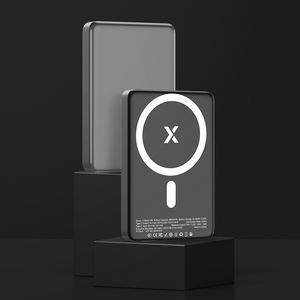
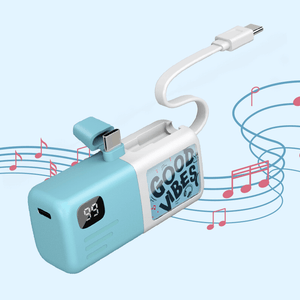
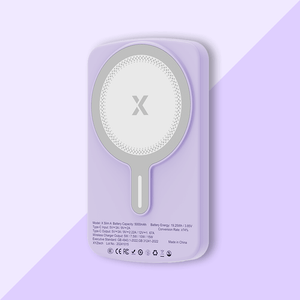
Looking for reliable portable power? XYZtech offers compact, wired and wireless 5,000mAh and 10,000mAh power banks that are ideal for daily commutes, travel, and keeping your devices powered when you need them most. Interested, start here: XYZtech Power Bank
Related Articles
Wireless Charging Portable Charger: Are They Worth It? | XYZtech
Portable Charger With Wall Plug: Simplifying Charging Experience!
Magnetic Power Bank: Is It Worth the Hype? Pros, Cons, and Tips
Power Bank with Built-In Cables: Is It Right for You? Pros and Cons


